
Edible Insects: What Are They Not Telling Us
Eat insects! What happened to chicken, beef, mutton, fish, and the host of others? You might be asking millions of questions about why you should eat insects, but you are not wrong to entertain such questions and doubts.
At the first conception of the idea of eating insects, what easily comes to the mind is the very creepy and dirty nature of insects. For someone in Africa, you can begin to imagine what a mosquito meal, cockroach meal or housefly meal would look and taste like. Oh, I can only imagine the worst. But hey! Slow down and tune down the woeful imaginations, because insect meal may not be a totally bad meal after all.
What Are Insects
Insects are believed to have been a part of the animal kingdom for at least 300 million years; they predate dinosaurs in existence. Although dinosaurs are extinct, insects are still around today, and some have barely changed since the time of the dinosaurs.
Even in the Arctic, insects are present practically everywhere on Earth. The majority of insects are land-based; however, some are found in freshwater, and a few in the ocean. On land, insects can be seen crawling on the ground, flying all day and night, or busy deep in the soil. Insects hold the distinction of being the most diverse group of life forms on earth, with over 1,000,000 different species. If you look for them, you may find them practically anywhere.
Other common animals, including crabs, crayfish, spiders, millipedes, centipedes, and scorpions, are related to insects. All of these creatures belong to a unique class known as the phylum Arthropoda, which is the Latin word for jointed foot.
Although insects and other arthropods, such lobsters, do not have the same appearance, all arthropods have the following traits in common: a divided body bilateral symmetry (the right and left half look the identical), paired segmented appendages (legs), specific sets of segments called “tagmata,” and an external skeleton that is shed as the animal grows.
Edible Insects: What Are They
Edible insects are those insects which are deemed fit for consumption. A little over 7000 years ago, people began eating insects as food. There have been reports of edible insect species from 18 orders with more than 2300 species, including five orders with at least 100 records.
These insects can be found both on land and in water. The majority of species are collected from nature, even though some are manufactured commercially. Many insects have been consumed globally, lepidopterans, orthopterans, isopterans, and hymenopterans are frequently regarded as common food sources.
Why You Should Eat Insects
There are a couple of reasons why insects may become the meal of the future, including the following:
Currently, there are more than 7 billion people living in the world. According to projections, that number will rise to 8.5 billion by 2030, then to 9.7 billion by 2050, and finally to 11.2 billion by 2100 (United Nations, 2020). Because humans rely largely on animal protein, as the population increases, people will consume more animal protein. As a fact, we know that humans use more animal protein than it is replenished or replaced.
The FAO predicted that 133 million tons of ready-to-cook equivalent poultry would be consumed globally as of 2021. In the past 50 years, there has been a sharp increase in the production of ready-to-cook animals; as can be shown, overall production has more than tripled since 1961, rising from 60 million tons in 1961 to 300 million tons in 2020 (Hannah and Max, 2017).
High-income nations have the highest meat consumption, with the largest meat-eaters in Australia, consuming around 116 kilograms per person in 2013. The typical North American and European consumes more than 110 kilograms and close to 80 kg, respectively.
High-income nations have experienced far slower changes in consumption, with most seeing stagnation or even declines over the past 50 years. Africa’s consumption patterns vary widely; some nations eat as little as 10 kg per person, or around half the average for the continent. Higher-income countries like South Africa consume 60 to 70 kg of food per person.
Due to the constantly growing global population, enormous demand is placed on the production of animal proteins. As a result, people are searching for alternate protein sources in order to address their ongoing protein undernourishment.
One of the better options is considered to be entomophagy, which is the scientific term for eating insects. Researchers have argued that eating insects and bugs might be a remedy for starvation since they might quickly provide significant amounts of multiple nutrients (Van Huis 2013). Farming insects is also effective, especially when compared to raising more conventional cattle.
One kilogram of beef is made from about 25 kilos of grass. Ten times as much protein from edible insects can be produced from the same amount of grass. This is because insects convert at a quicker rate and because up to 90% of an insect’s body mass can be eaten, as contrasted to only 40% of a cow (Theresa, 2022).
Climate change and environmental footprint
The production of meat has a significant negative impact on the environment, and is manifested as increasing freshwater usage, agricultural land use, and greenhouse gas emissions. Producing and consuming meat, dairy, and other protein products in a way that has fewer negative environmental effects is one of the world’s most urgent concerns. Livestock, or animals farmed for the production of meat, dairy, eggs, and seafood, contribute to emissions in a number of ways. For instance, the digestive processes of ruminant animals, mostly cattle, result in the production of methane.
Food is responsible for around 26% of worldwide GHG emissions. This 31% of emissions only pertains to emissions produced during farm production; it does not take into account supply chain emissions or changes in land usage related to the production of crops used as animal feed; these data are separately included in the other categories.
If the growing concern on the impact of animal production and consumption on the climate continues, the world may not be many days away from eating insects and bugs as meat, but also as snacks in the form of cricket burger, bug chips, among others. Although such insects as locusts, winged termites, grasshoppers, weevils and beetles are already being consumed across the globe.
For instance, a publication by the Michigan State University Extension (2022) stated that many native American tribes consumed insects like cicadas, ants, and grasshoppers as part of their diet. Chapulines are the name for fried grasshoppers in Mexico.
The BBC claims that an Aztec “caviar” was prepared from water fly eggs that were fried into ahuautle patties. Mezcal worms, which come in two varieties, are both consumed and used to flavour alcoholic mezcal. Escamol is the fried larva and pupa of ants. Australian Aboriginal people have long consumed honeypot ants as a tasty, sweet treat.
Moth larvae, such as witchetty grubs, are a vital source of food in the desert. Lake flies are harvested from swarms in Lake Malawi, Africa, and made into patties that have seven times the protein of beef. In East Asia, silkworm pupa is consumed. The largest variety of bugs appears to be consumed in Southeast Asia. There are outdoor marketplaces where you can find many various kinds of preparations and insects. Beetles are one of them. These include grasshoppers, crickets, huge water bugs, tarantulas, scorpions, and other creatures, as well as the adults and larvae of beetles.
Currently, there is a campaign underway from the United States aimed at changing the perceptions around the consumption of insects and bugs. The worldwide food supply will “transition” away from using cows, pigs, and chickens in favour of a more sustainable diet that includes consuming insects and other small animals, according to the Joe Biden administration’s climate change goals. Large-scale regulatory reforms are being implemented for farmers in North America and Europe as a result of the Build Back Better or Green New Deal programs.
Joe Biden has promised to direct all of his administration’s efforts in the US to lower carbon emissions and safeguard the environment. The need to shift Americans’ diets away from traditional farm proteins and toward sustainable substitutes like cockroaches, crickets, and grasshoppers is a part of that strategy.
Additionally, the United Kingdom is making a push to switch to edible insects. The Food Standards Agency (FSA) recently sought stakeholder feedback on a possible statutory transitional time under England, Scotland, and Wales’ innovative food standards for edible insects. Food Standards Scotland provided feedback on the plan (FSS).
The UK diet is slowly including more insects. Sainsbury’s stated in November that it would introduce Eat Grub’s Smoky BBQ Crunchy Roasted Crickets in 250 locations nationwide, making it the first British supermarket to carry edible bugs. The crickets are advertised as a single snack as well as a garnish for foods including tacos, noodles, and salads. Customers of Deliveroo in some areas of London started being able to purchase snacks including buffalo worms wrapped in a beta leaf, salted cricket and smoked tomato salad, and spicy cricket rice cakes using the app in 2017.

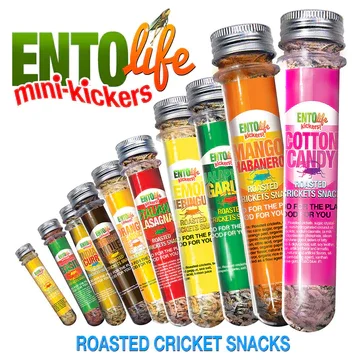
Source: https://youcaneatbugs.com/products/mini-kickers-set-savory-flavored-roasted-cricket-snack.
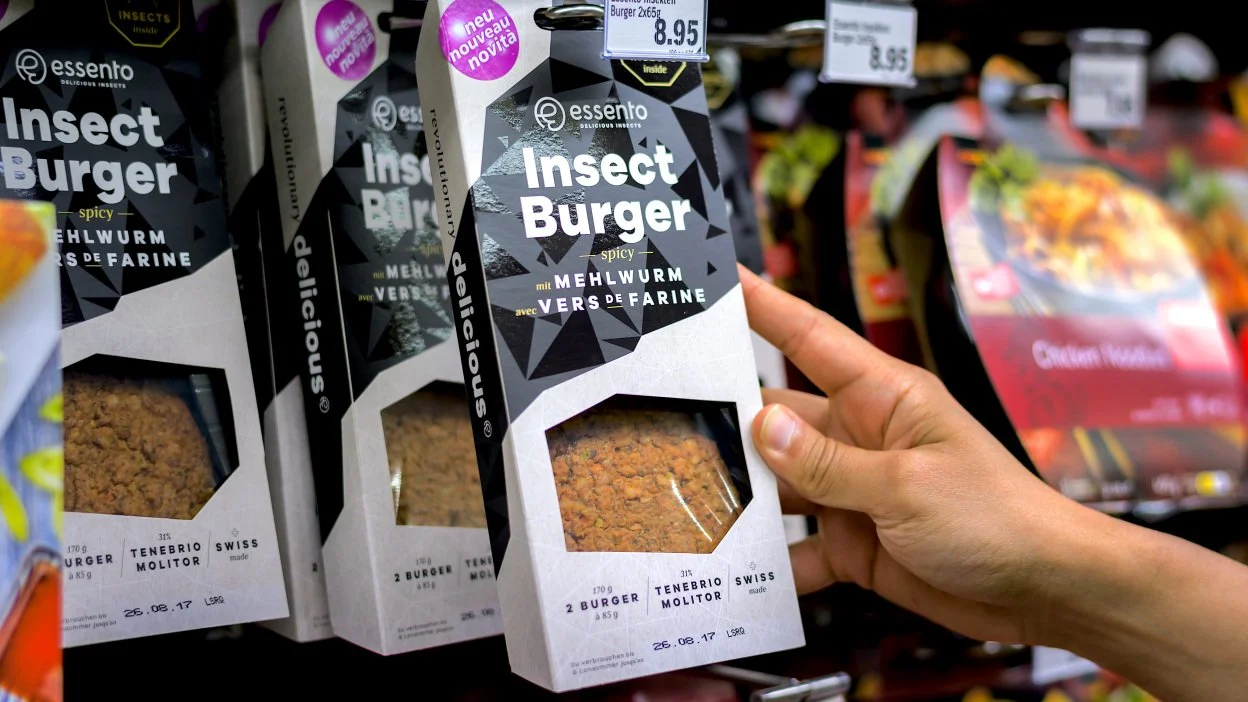
Source: https://mashable.com/article/eat-bugs-insects-food

Source: https://reason.com/2018/03/17/eating-insects-could-be-the-future-of-cu/
The Nature Climate Change Commission has reiterated that if humans do not change their food consumption and farming habits, the world would run out of food by 2050 and raise the global temperature by 2 degrees Celsius. Food production consumes more than 35% of the Earth’s permanently ice-free territory, making it the leading cause of deforestation and biodiversity loss.
This is expected to rise as the world’s population grows by more than 2.5 billion people over the next few decades. Analysts predict that the market for insect protein will surpass $4.1 billion during the next five years, with global investments in the sector roughly doubling to about $475 million in 2020.
According to a recent Rabobank estimate, by 2030, the 10,000 metric tons of insects currently raised each year would increase to 500,000 metric tons (Little, 2021). It is more a matter of “when” than “if” people will start eating bugs and other insects on a regular basis.
Nutrition Reasons
Researchers have argued that such nutrients as iron, protein, and vitamin B12 are found in significant quantities in crickets. Grasshoppers are also believed to be a good source of protein.
While significant amounts of fatty acid, calcium, and protein are found in termites, in some parts of South America and India, ants, which are thought to have a lemony flavour, are employed in high-end cuisine (Theresa, 2022). Edible insects include high-quality proteins, vitamins, and amino acids that help diversify diets and enhance nutrition, according to the United Nations Food and Agriculture Organisation.
Therapeutic Reasons
Following a ground-breaking new study, it may soon be advised to eat ants and other insects to prevent cancer. Italian researchers conducted a number of experiments that demonstrate the presence of significant antioxidant concentrations in the common invertebrate, as well as other invertebrates like grasshoppers and crickets. The substances are crucial for lowering the chemical reactions that result in free radicals, which are thought to increase the risk of cancer. Additionally, free radicals have been associated with an increased risk of diabetes and cardiovascular disorders.
A team at the University of Rome set out to investigate the invertebrates’ antioxidant potential since food scientists believe Western consumers may need to start including insects in their diet in the coming decades. They discovered that several of the insects, after being ground up, had antioxidant concentrations several times higher than those of orange juice or olive oil, two of the foods most usually suggested to reduce free radicals.
Furthermore, the highest antioxidant capacities were found in the water-soluble extracts of grasshoppers, silkworms, and crickets, which were five times more than those found in fresh orange juice. University of Rome researchers ground up a variety of insects, including ants, grasshoppers, crickets, and silkworms.
The amounts of antioxidants in the powder, including vitamins A, C, and E and beta-carotene, were then measured. With the intention of using them as a drink, only the insects’ soluble sections were employed; their wings and stingers were removed first. Grasshoppers, black ants, and mealworms have the highest concentrations of total polyphenols, which is another way to describe an organism’s capacity for antioxidant protection.
The antioxidant capacity of fat-soluble extracts from silkworms, giant cicada, and African caterpillars was double that of olive oil.
Edible insects are a great source of protein, fibre, minerals, vitamins, and polyunsaturated fatty acids. Insects, such as crickets, termites, and grasshoppers, are traditionally consumed in Nigeria for their nutritional value. However, numerous studies have demonstrated that they can also be bioengineered to treat diseases like cancer, diabetes, rheumatoid arthritis, HIV, wounds, obesity, and malnutrition, among others.
Conclusion
Now that you have seen that eating insects may not be a totally crazy thing to do, because of the many nutritional value it has. Celebrities such as Nicole Kidman and Lupita Nyong’o may have their kitchens stuffed with a variety of insects. But, hey! Before you join the bandwagon of insect eaters, remember that everything that has a good side will most likely have a downside, as we really know little about the possible dangers the consumption of insects could expose humans to.
Sources
Amanda Little (2021) Why Bugs Must Be a Bigger Part of the Human Food Chain. https://www.washingtonpost.com/business/energy/why-bugs-must-be-a-bigger-part-of-the-human-food-chain/2021/12/17/af34922e-5f31-11ec-b1ef-cb78be717f0e_story.html
Chukwuma Muanya (2019). Why eating ants, grasshoppers, silkworms protect against cancer. The Guardian https://guardian.ng/features/why-eating-ants-grasshoppers-silkworms-protect-against-cancer/
Deena Theresa (2022) Scientists say eating insects might be a way to help the planet. https://interestingengineering.com/science/eating-insects-might-help-the-planet
Food Standard Agency (2022) Consultation on transitional arrangements for edible insects in Great Britain. https://www.food.gov.uk/news-alerts/consultations/consultation-on-transitional-arrangements-for-edible-insects-in-great-britain\
Gerland, P., Raftery, A. E., Sevcikova, H., Li, N., Gu, D. A., Spoorenberg, T., et al. (2014). World population stabilisation unlikely this century. Science, 346(6206), 234–237. https://doi.org/10.1126/science.1257469.
Godfray, H. C., Beddington, J. R., Crute, I. R., Haddad, L., Lawrence, D., Muir, J. F., et al. (2010). Food security: The challenge of feeding 9 billion people. Science, 327(5967), 812–818. https://doi.org/10.1126/science.1185383.
Hannah Ritchie and Max Roser (2017) – “Meat and Dairy Production”. Published online at OurWorldInData.org. Retrieved from: ‘https://ourworldindata.org/meat-production.
Helena Horton (2014). Vegetarians have it right- we’ll run out of food by 2050 if we don’t cut down on meat. https://www.mirror.co.uk/news/ampp3d/vegetarians-right–well-run-out-4144519
Jongema, Y. (2017). Worldwide list of recorded edible insects. The Netherlands: Department of Entomology, Wageningen University & Research.
Michigan State University Extension (2022) Eating bugs: Part 2 – Eating bugs around the world https://www.canr.msu.edu/news/eating-bugs-part-2-eating-bugs-around-the-world
Ramos-Elorduy, J. (2009). Anthropo-entomophagy: Cultures, evolution and sustainability. Entomological Research, 39(5), 271–288.
Sundance (2022) U.S. Public Broadcasting Promotes American Diet of Insects to Support Biden Administration Climate Change Initiatives https://theconservativetreehouse.com/blog/2022/07/19/u-s-public-broadcasting-promotes-american-diet-of-insects-to-support-biden-administration-climate-change-initiatives/.
United Nations (2022) World Population Projection. https://www.un.org/en/global-issues/population#:~:text=The%20world%20population%20is%20projected,surrounding%20these%20latest%20population%20projections.
University of Nebraska-Lincoln (2022). What is Insect? https://entomology.unl.edu/scilit/what-insect
Van Huis, A., Van Itterbeeck, J., Klunder, H., Mertens, E., Halloran, A., Muir, G., et al. (2013). Edible insects: Future prospects for food and feed security. Roman: Food and Agriculture Organisation of the United Nations.